Tucson’s weather follows a fairly predictable pattern, which makes it easy to plan ahead once you know what each season actually brings.
Winter (December-February)
Daytime highs typically sit between 65-70°F, with nights dropping into the 40s°F. Occasional light rain is possible, but snow is rare at Tucson’s elevation.
Spring (March-May)
Spring brings mild, dry days in the 75-90°F range and the year’s best wildflower displays, especially in March and April after a wet winter.
Summer (June-September)
June is typically the hottest and driest month, often exceeding 100°F. The monsoon season arrives by July, bringing dramatic afternoon thunderstorms and a noticeable rise in humidity through September.
Fall (October-November)
Temperatures ease back into the comfortable 75-85°F range, making fall one of the most popular times to visit for outdoor activities.
Planning Around the Weather
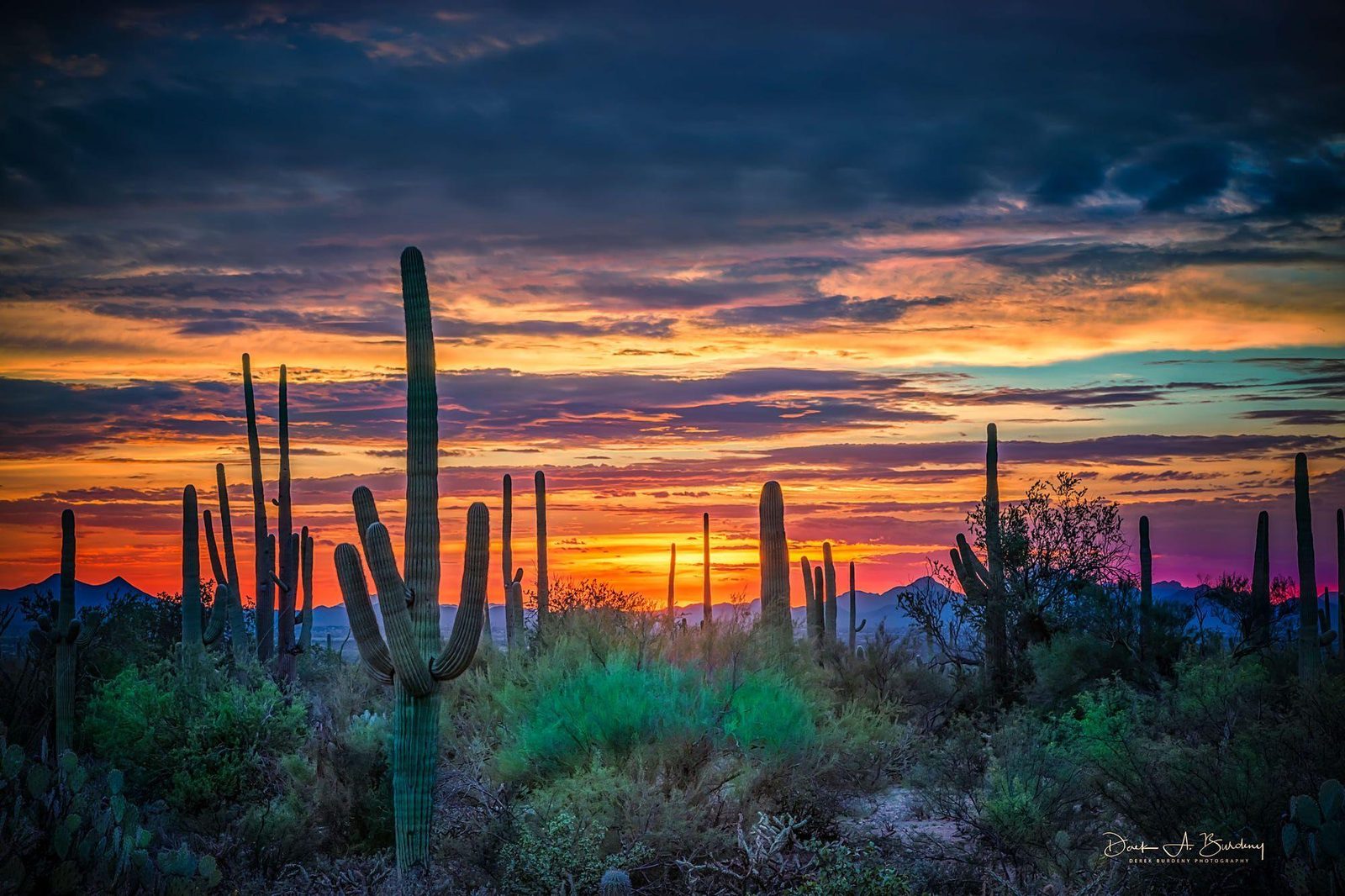
Because of the heat, most of our tours – including the Sonoran Desert Sunset Jeep Tour – run in the early morning or evening year-round rather than midday.
Humidity and Comfort
Outside of monsoon season, Tucson’s humidity is typically very low, which makes even hot days feel more bearable than similar temperatures in humid climates. That same dry air, though, means sunburn and dehydration can happen faster than visitors expect, especially at the city’s elevation of roughly 2,400 feet.
Sun Intensity Year-Round
Because of its southern latitude and clear skies, Tucson sees strong UV levels even in cooler months, which surprises many winter visitors who assume mild temperatures mean lower sun exposure. Sunscreen is worth applying regardless of the season, not just in summer.
Checking Forecasts Before a Tour
During monsoon season, we check radar before any outdoor departure and will adjust timing if a storm cell is tracking toward our route. Outside of monsoon months, Tucson’s forecasts tend to be highly consistent day to day, which makes planning tours well in advance much easier.