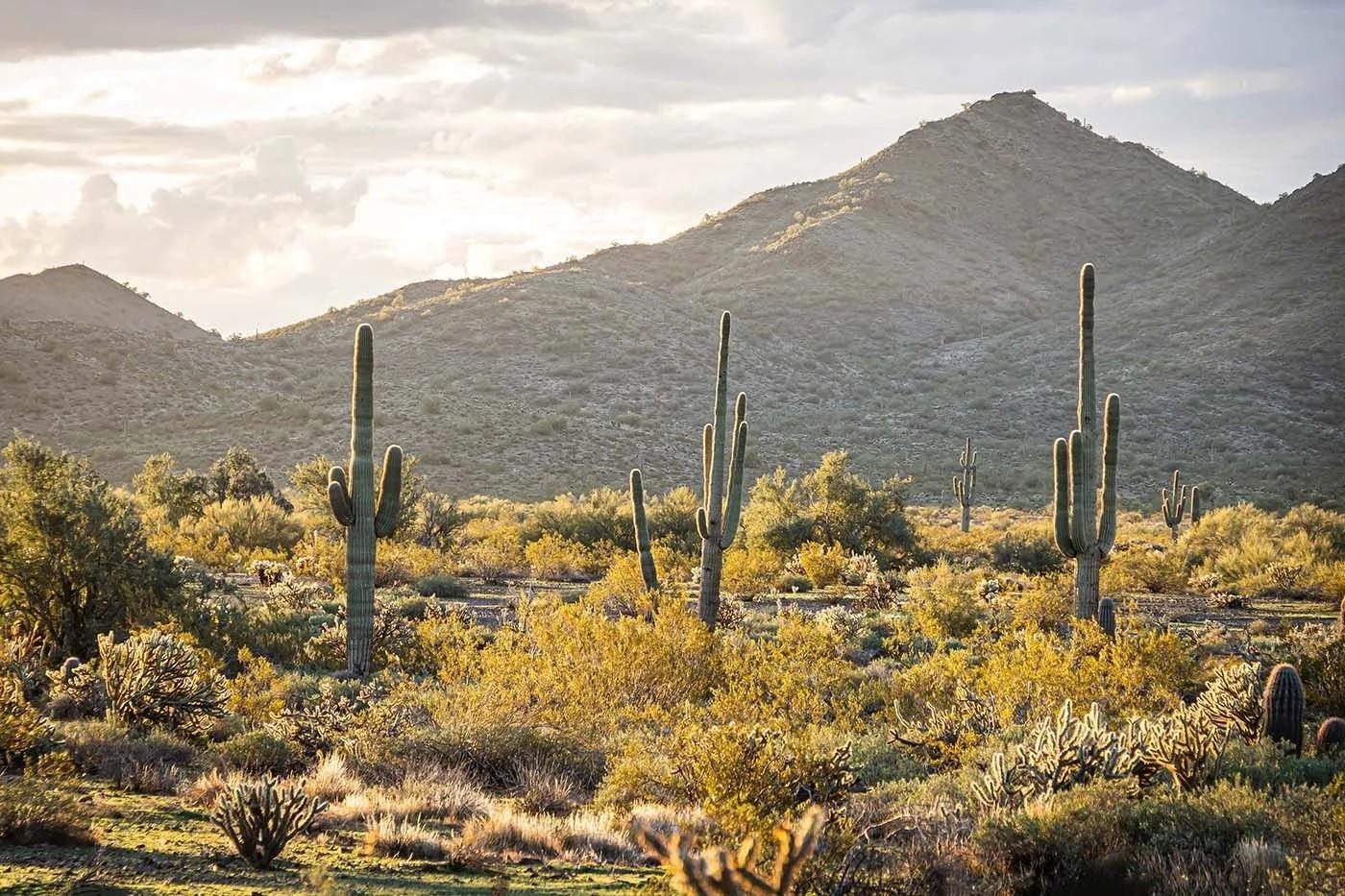
The saguaro is the plant most associated with the Sonoran Desert, and it’s full of surprising biology once you look past its familiar silhouette.
10 Facts Worth Knowing
- Saguaros grow slowly – a 10-year-old plant may be just an inch or two tall.
- A mature saguaro can live well over 150 years, with some specimens estimated at 200.
- They don’t typically grow arms until they’re 50-70 years old.
- A fully grown saguaro can weigh several tons, mostly from stored water.
- Their white flowers bloom at night and are Arizona’s official state flower.
- Gila woodpeckers and elf owls commonly nest in holes carved into saguaro trunks.
- Saguaros are found almost exclusively in the Sonoran Desert, nowhere else in the wild.
- Their shallow, wide-spreading roots let them absorb rainwater quickly after rare storms.
- It’s illegal to remove or damage a saguaro on public land in Arizona.
- Their red summer fruit was historically harvested by the Tohono O’odham people for food and syrup.
Where to See Them Up Close
Dense saguaro forests are easiest to appreciate on foot or from an open-air vehicle. Our Saguaro National Park Sunrise Hike walks directly through a mature forest, while the Sonoran Desert Sunset Jeep Tour offers a close look at golden hour.
A Protected Species
Because of their slow growth and ecological importance, saguaros are protected under Arizona state law, and transplanting or removing one without a permit is a criminal offense. Many of the saguaros visible from Tucson’s trails and roads are well over a century old, which is part of why guides ask visitors to stay on marked paths.